
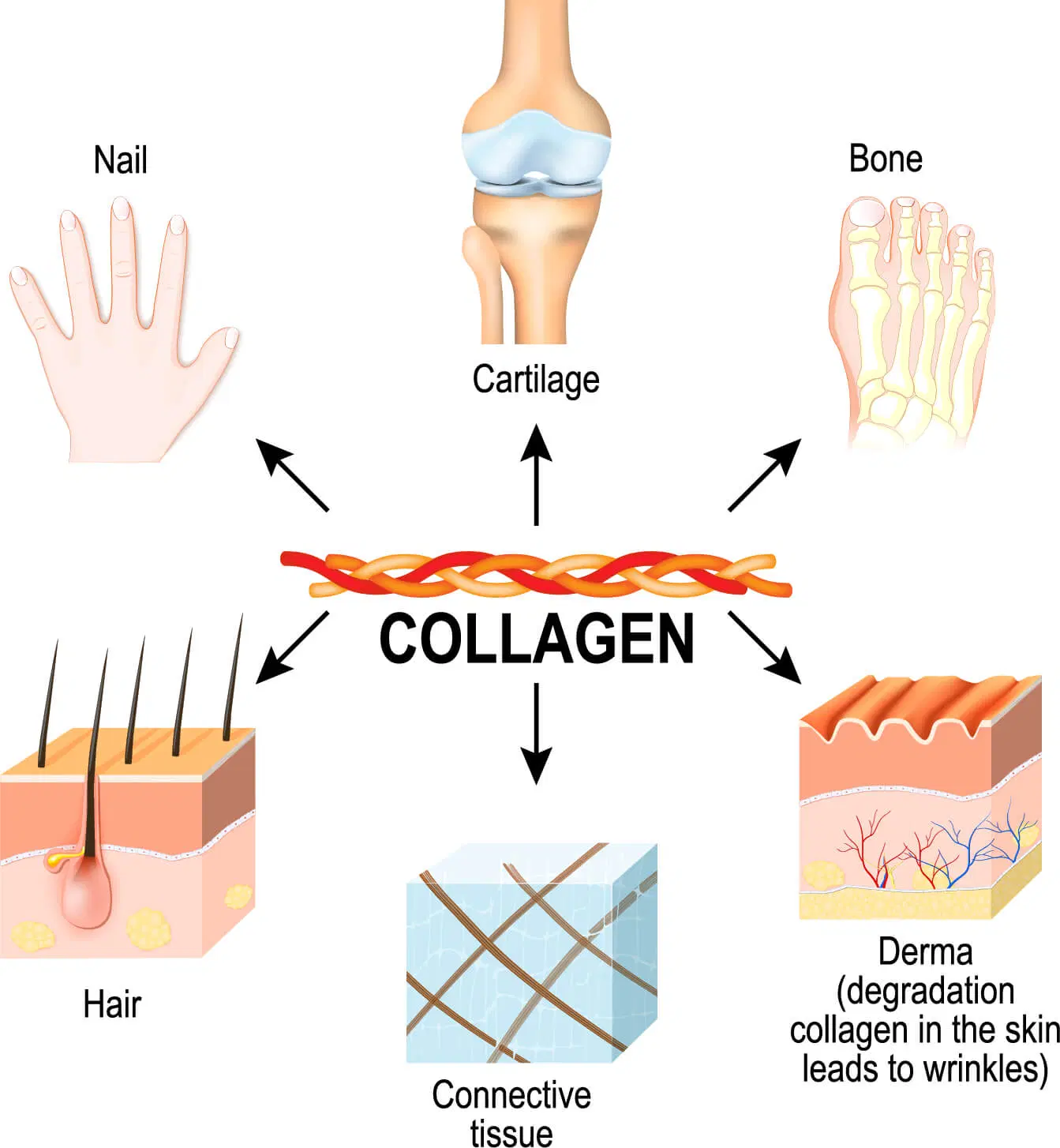
Collagen is often touted as a beauty-enhancing supplement, but its significance goes far beyond skin-deep. As the most abundant protein in the human body, collagen plays a crucial role in maintaining the health and functionality of various bodily systems. Let’s delve into why collagen is so vital for our overall well-being.
People who have h-EDS often get dismissed due to a profound misunderstanding of the disease. It is NOT just being extra flexible or having stretchy skin! While joint hypermobility is a hallmark of h-EDS, the condition involves much more than increased flexibility. Collagen abnormalities in individuals with h-EDS lead to a variety of symptoms due to the weakened structural integrity of tissues. People with h-EDS often experience hypermobile joints that easily dislocate, chronic joint pain, and fragile skin that bruises or scars easily. This is because the defective collagen in h-EDS fails to provide the necessary strength and stability to connective tissues. Additionally, h-EDS can cause complications in other collagen-rich structures, such as the cardiovascular system, resulting in issues like varicose veins and a higher risk of arterial rupture. This multisystemic involvement underscores the complexity of h-EDS and the need for comprehensive management strategies that address the diverse manifestations of the disorder.

The Importance of Collagen in the Body
1. Structural Support
Collagen is the primary structural protein found in connective tissues such as skin, bones, muscles, tendons, and ligaments. It acts like a scaffold, providing strength and elasticity. For example:
- Skin: Collagen provides structure and firmness, keeping the skin plump and resilient. As we age, collagen production declines, leading to wrinkles and sagging.
- Bones: Collagen makes up about 30% of bone tissue, contributing to their strength and flexibility. This helps prevent fractures and maintains bone density.
- Joints: In cartilage, collagen acts as a cushion, absorbing shock and reducing friction in the joints, thus preventing conditions like osteoarthritis.
2. Healing and Regeneration
Collagen plays a pivotal role in wound healing and tissue regeneration. When the skin is injured, collagen forms a matrix that promotes the growth of new tissue. This is why collagen supplements and treatments are often used to enhance recovery after surgery or injury.
3. Maintaining Organ Health
Collagen is present in various organs, supporting their structure and function:
- Heart: Collagen fibers provide the necessary strength and flexibility to heart valves and blood vessels, ensuring proper blood flow and heart function.
- Lungs: In the lungs, collagen supports the structure of the alveoli (tiny air sacs), facilitating efficient gas exchange and respiratory function.
- Kidneys and Liver: Collagen maintains the integrity of the extracellular matrix in these organs, aiding in filtration and detoxification processes.
4. Digestive Health
Collagen is a key component of the gut lining, helping to maintain its integrity and prevent conditions like leaky gut syndrome. It supports the growth and repair of the intestinal lining, promoting better nutrient absorption and overall digestive health.
5. Muscle Mass and Recovery
Collagen contributes to muscle mass by supporting the structure of muscle tissue. It is also involved in the repair and growth of muscles after exercise or injury. For athletes and active individuals, collagen supplementation can aid in faster recovery and reduce the risk of injury.
6. Enhancing Metabolic Functions
Collagen contains amino acids like glycine, proline, and hydroxyproline, which are essential for various metabolic processes. Glycine, for instance, plays a role in the synthesis of creatine, a compound that supplies energy to muscles during high-intensity activities.

Collagen is indispensable for maintaining the structural integrity, function, and regeneration of tissues throughout the body. Its role extends beyond cosmetic benefits, deeply influencing overall health and vitality.
