
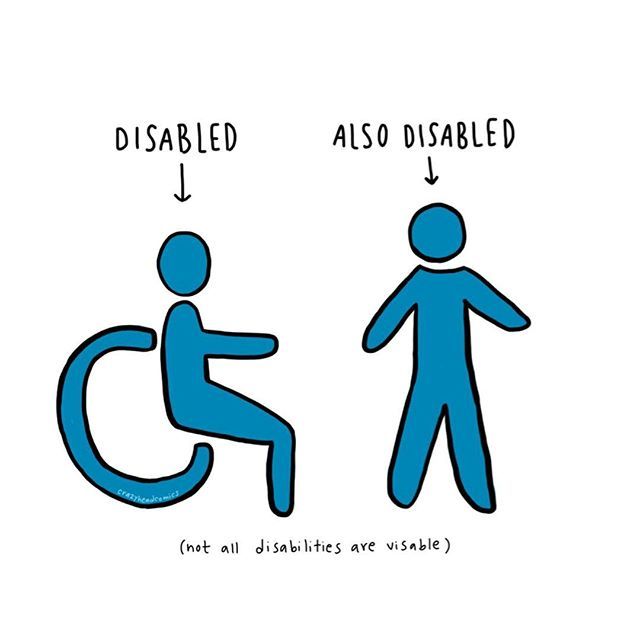

In recent years, there has been a noticeable rise in individuals who take it upon themselves to police the legitimacy of others’ disabilities. These self-appointed arbiters, often referred to as the “disability police no one asked for,” believe they are protecting the rights and resources of “real disabled people” by calling out those they suspect of faking their disabilities. However, their actions frequently cause more harm than good.
The targets of these disability vigilantes are often individuals with invisible illnesses, ambulatory wheelchair users, young people using canes or mobility scooters, cancer patients, and others whose disabilities are not immediately apparent. Invisible illnesses can include chronic pain, mental health conditions, neurological disorders, and autoimmune diseases, among others. For these individuals, the need for accommodations and accessible spaces is real and vital, even if their disability is not outwardly visible.

The “disability police” often confront people they believe are faking a disability, questioning their need for accessible parking spots, priority seating, or mobility aids. This behavior can escalate into verbal harassment, as the accusers insist they are defending the rights of “genuine” disabled individuals. This policing stems from a flawed perception of disability, where only those with visible impairments are deemed worthy of accommodation and respect.
The harm caused by these actions is significant. Firstly, the stress and anxiety of being publicly questioned or accused can exacerbate the symptoms of many invisible illnesses. The psychological toll of constantly feeling scrutinized and judged can lead to increased feelings of isolation and depression. Moreover, this behavior perpetuates harmful stereotypes and misconceptions about disability, reinforcing the idea that only certain types of disabilities are valid.

For people with invisible illnesses, the pressure to “prove” their disability can feel overwhelming. They may feel compelled to perform their disability in a way that meets societal expectations, exaggerating symptoms or carrying visible aids they might not otherwise need. Conversely, they might hide their symptoms to avoid confrontation and judgment, even when doing so exacerbates their condition. This need to navigate public perception adds an additional layer of difficulty to living with a disability.
Furthermore, the actions of the “disability police” undermine the principle of accessibility. Accessible spaces and accommodations are designed to support a diverse range of needs, recognizing that disability is not a one-size-fits-all condition. When individuals are harassed for using these spaces, it creates an environment of hostility and exclusion, discouraging people from seeking the support they need.
It’s essential to understand that disability is a broad and varied experience, and not all disabilities are visible. Some are short term, some long term, and some are lifelong. Disabilities affect people of all ages and backgrounds. The assumption that one can determine the legitimacy of someone’s disability based on appearance alone is deeply flawed and harmful. Advocacy for disabled people should focus on increasing understanding, empathy, and support, rather than policing and exclusion.
I myself have started using a mobility aide (walking stick/cane) in public. It is hard to take that leap but I am glad that I did. I use my stick at work, when I need to stand or walk a lot, on uneven ground, and on bad days. Having a mobility aide is important, as it gives me confidence and independence – allowing me to do what I want to do. I do worry people will think I am faking. I don’t use one every day or everywhere. I know there is a chance that I will need additional aides in the future. I hope that I can be independent for many many years to come. I also hope that people will learn to think before they speak and that they come to realize that people with disabilities come in all shapes, ages and sizes and are under no obligation to explain their condition.
Education and awareness are crucial in combating the negative impact of the “disability police.” By fostering a more inclusive and informed society, we can reduce the stigma surrounding invisible illnesses and other non-apparent disabilities. This involves listening to the experiences of disabled individuals, respecting their needs without question, and challenging the prejudices that lead to such harmful behavior.
In conclusion, the self-appointed “disability police” who target individuals with invisible illnesses and other non-apparent disabilities do more harm than good. Their actions perpetuate harmful stereotypes, increase stress and anxiety for those they target, and undermine the principles of accessibility and inclusion. True advocacy for disabled people requires empathy, education, and a commitment to supporting all individuals, regardless of how their disability manifests.


